To get your care home in the local paper, find one true story about a real person, get their written consent, and email it with a good photograph to a named reporter. Do this every month.
Nobody can promise it will run, because that is the editor’s decision.
When a family starts looking for care, they rarely begin with a blank page.
A son may remember reading about the 100th birthday at the home near the station. A neighbour may mention the choir that sang there at Christmas.
For a home with empty rooms, that familiarity is useful. A story costs your time, with no advert spend, and it can also put your name on the paper’s website.
We have no reliable figure for what a story brings in, so we will not offer one.
Ask every family who enquires how they heard of you, and write it down. A notebook works, and so does a proper care home enquiries list.
What should you do first?
Give yourself a morning for this. Nothing here needs a budget.
- List the titles that cover your town, including the weekly paper, its website, community sites, parish magazines and local radio.
- Read the last month of each. Note which stories about people they run, and who wrote them.
- Telephone the news desk. Ask who covers your area, how they like to receive stories and photographs, and when they need them for the next edition.
- Agree who does what. An activities coordinator usually spots the stories, and the Home Manager checks and sends them.
- Sort out your consent form before you write a word. The section below tells you what it needs.
- Start a story diary, with one line a week about what happened and who was involved.
- Send your first story this month, even if it is a small one.
What counts as a story?
A story is about a person, and something has happened to them or changed for them. “Residents enjoyed a musical afternoon” is an activity.
“Ivy, 91, sang with the band she toured with in 1956” is a story, if it is true and Ivy is happy for you to tell it.
These are the kinds of story local papers often use:
- big birthdays and wedding anniversaries
- a resident’s past, such as war service, a local shop they ran or a record they set
- a school or nursery visit that has become a real friendship
- money raised for a local charity, with the amount and who it helps
- a carer reaching 25 years’ service, or an apprentice from the town qualifying
- a local link, like the bowls club restoring your garden
For a 100th birthday or a diamond wedding, look at the message from the King. Anniversaries always need an application.
Most people aged 100 get a birthday message through their pension without one, so check first. Then tell the paper ahead of the day.
National weeks give you a reason to contact the paper. In 2026, Dementia Action Week fell in May, and Carers Week and Care Home Open Week in June. Check the dates each year.
A new menu or a refurbished lounge is rarely a story for a paper. Put those in your newsletter. Our guide to story ideas for the local paper has more to borrow.
How do you write a care home press release?
A press release is simply your story, written so a reporter can use it with little work.
A short email does the job. Keep it to about 200 words, and put the most interesting fact in the first sentence.
Include who, what, when and where, and why it matters to the town.
Add one quote in the person’s own words, and read it back to them before you send it. End with your name and a mobile number that gets answered.
Here is an example, with made-up details:
Subject: Anytown woman, 100, celebrates with the school she taught at
Ivy Marsh turned 100 on Tuesday, and pupils from St Anne’s Primary came to [home name] to sing for her. Ivy taught at St Anne’s for 31 years.
“Some of their grandparents sat in my class,” she said. Photograph attached, with Ivy’s permission. Call [name] on [mobile] for more.
Leave out your values, your mission and phrases like “we pride ourselves”. A reporter will delete them anyway, and they make the email look like an advert.
What do residents and families need to agree to first?
Get this right before anything else. A resident’s name and photograph are theirs to give, and weak consent can bring a home a great deal of trouble.
The Information Commissioner’s Office (ICO) says a photograph that identifies someone is personal data. Its guidance on valid consent sets the standard we would work to.
In practice, that means consent is freely given, specific, an active yes and easy to withdraw, and you can prove it.
A line in the admission paperwork will not do, and a quick verbal yes leaves you nothing to show.
The ICO also warns that consent is harder to rely on where there is an imbalance of power. A resident depends on you for daily care, so say plainly that refusing changes nothing.
For each story, ask the resident to sign a short form that covers:
- what the story says and which photographs it uses
- which paper it goes to, and that it may appear on the paper’s website and social media
- whether you may also use it on your own website and social media
- whether they want their full name, first name and age used, or none of these
- how to change their mind, and who to tell
Be honest about the limits. Once a paper has printed something you cannot recall it, and you can only ask a website to take a story down.
Check again on the day, in case someone has changed their mind.
What if a resident may lack capacity?
Start by assuming they can decide, and help them to do so. The Mental Capacity Act code says capacity is about a particular decision at the time it needs to be made.
Someone may be able to agree to a photograph on one day and not on another.
Write down how you assessed it.
In a December 2025 decision, the Ombudsman found a provider at fault over a promotional photograph. The resident had signed a form, but the provider kept no record of how it assessed their capacity.
If the person cannot understand what a newspaper story means, our advice is to leave them out.
The ICO says someone else can only consent if you can show they have the legal authority, such as a power of attorney. A loving daughter’s yes is not enough on its own.
What else should you check?
- Health details. The ICO treats health information as needing extra protection, so leave out diagnoses unless the resident has specifically agreed. Check with your data protection lead first.
- Everyone else in the picture. That means other residents, staff, visitors and children. Ask the school to confirm it has parents’ permission.
- Family. Tell them before it runs, with the resident’s agreement. Nobody wants to find their mother in the paper by accident.
- Safety. Some people moved to your home to get away from someone. Ask whether being named could cause a problem.
Regulation 10, one of the rules CQC inspects against, requires you to protect people’s privacy and treat them with dignity.
Ask yourself whether the person would be pleased to see this story on their neighbour’s table. This section is a plain-English guide, so take advice on anything unusual.
Who do you send it to, and when?
Send it to one named reporter, in a personal email, with the story in the body and the photographs attached. A round-robin to ten addresses looks like spam and is treated like it.
Timing matters more than polish. Tell the reporter a week before a big event in case they want to come, then send the story and photograph the same day.
A story from three weeks ago is old news.
Call the next working day, once, to check it arrived. Ask whether they need anything else. If they pass, thank them and send something better next month. If they run it, send a short thank-you.
If a reporter visits, a member of the team stays with them throughout. Show them only people who have already agreed, and remember that their photographs need the same consent as yours.
What makes a good photograph?
A phone is fine if the picture is sharp and well lit. Send the original file, because a small copy from social media will not print well.
Take it near a window or outdoors, and get people doing something together.
Send two or three, some wide and some upright, with everyone’s names in the caption from left to right. Avoid the row of people holding a giant cheque, unless you have nothing else.
For a bigger moment, such as an anniversary of the home or a royal visit, a professional earns the fee. Our care home photography page explains how that works.
The homes with plenty to tell usually have people coming through the door.
A monthly carers’ morning, a school reading scheme or a choir that practises in your lounge will all bring you stories, along with friends in the town.
Start with one relationship and keep it going. Our guide to community engagement for care homes shows who to approach, and supporting family carers is a good place to begin.
What if a reporter calls about bad news?
Decide this before you need it. Suppose a reporter telephones on a Tuesday about your inspection report.
Your receptionist should take their name, number, question and the time they need an answer, then pass it straight to the Home Manager or owner.
Call back on time. Say what happened, what you have done and how families can ask questions. Never discuss an individual resident, even to defend the home. Tell your families before they read it elsewhere.
“No comment” tends to read badly, and a short honest statement gives the reporter something fair to print. Our guide to your CQC rating and your marketing covers what to say at each rating.
How do you get more from each story?
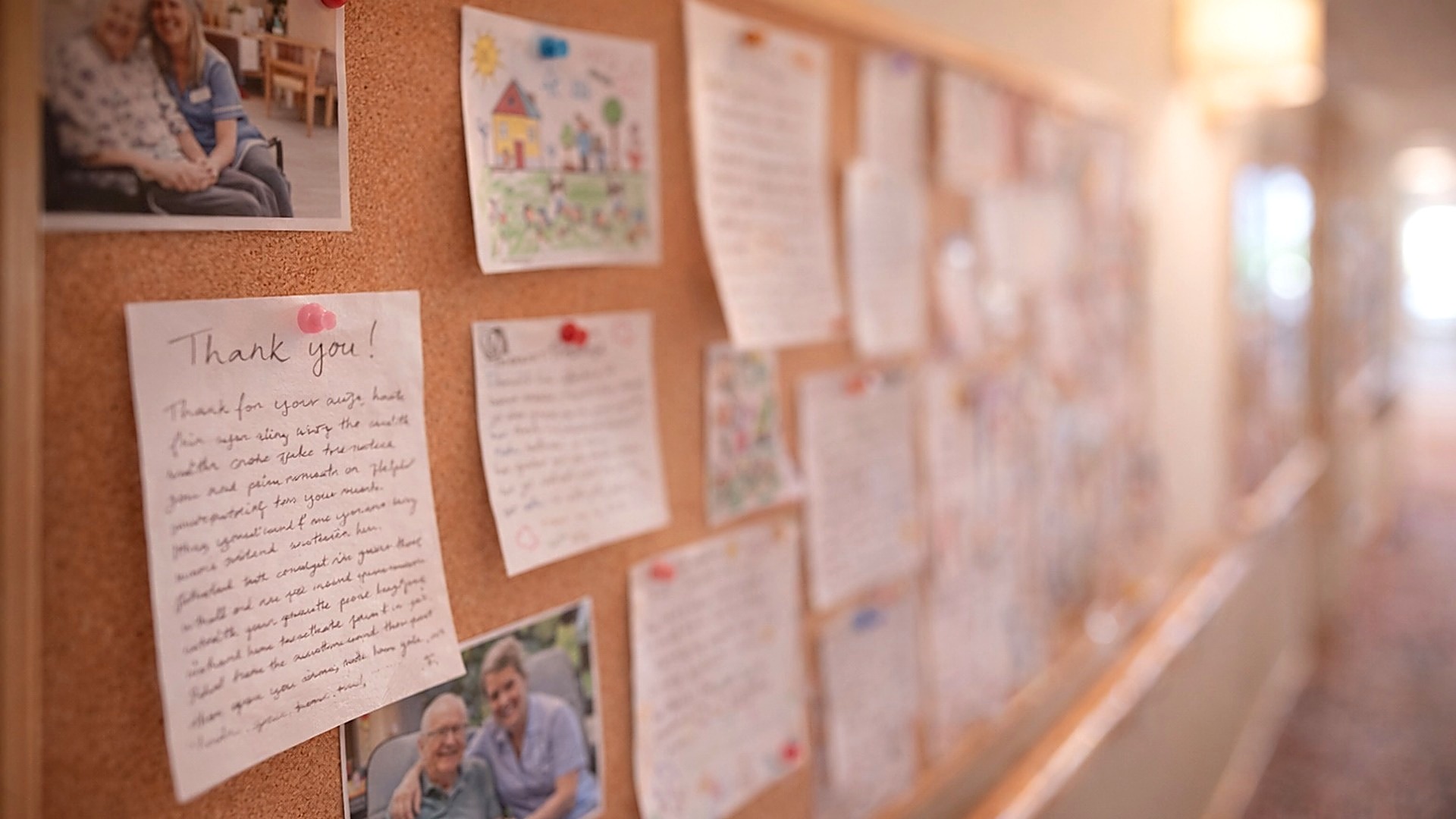
Put a printed copy on the noticeboard, and mention it in your newsletter.
Write your own short version for your website, in your own words, because the paper’s words and photographs usually belong to the paper. Link to their piece instead of copying it.
Thank the people involved. It is often the resident’s and the team’s pride that makes the next story easier to find.
Good coverage and good care home reviews also back each other up when a family looks you up.
When is it worth getting help?
Try it yourself first. If you can spare an hour or two a month, you can do this well, and no one knows your residents better than you.
Help makes sense when your activities team is stretched and months go by with nothing sent.
Stories for your local paper are part of the Marketing Assistant, and our care home PR page explains how that works. Prices are on the pricing page.
Be wary of anyone who guarantees coverage in a local paper. The editor decides, and a good supplier will tell you so.
Every guide on this topic
Getting into the news
Your place in the community
Your reputation
Free tools