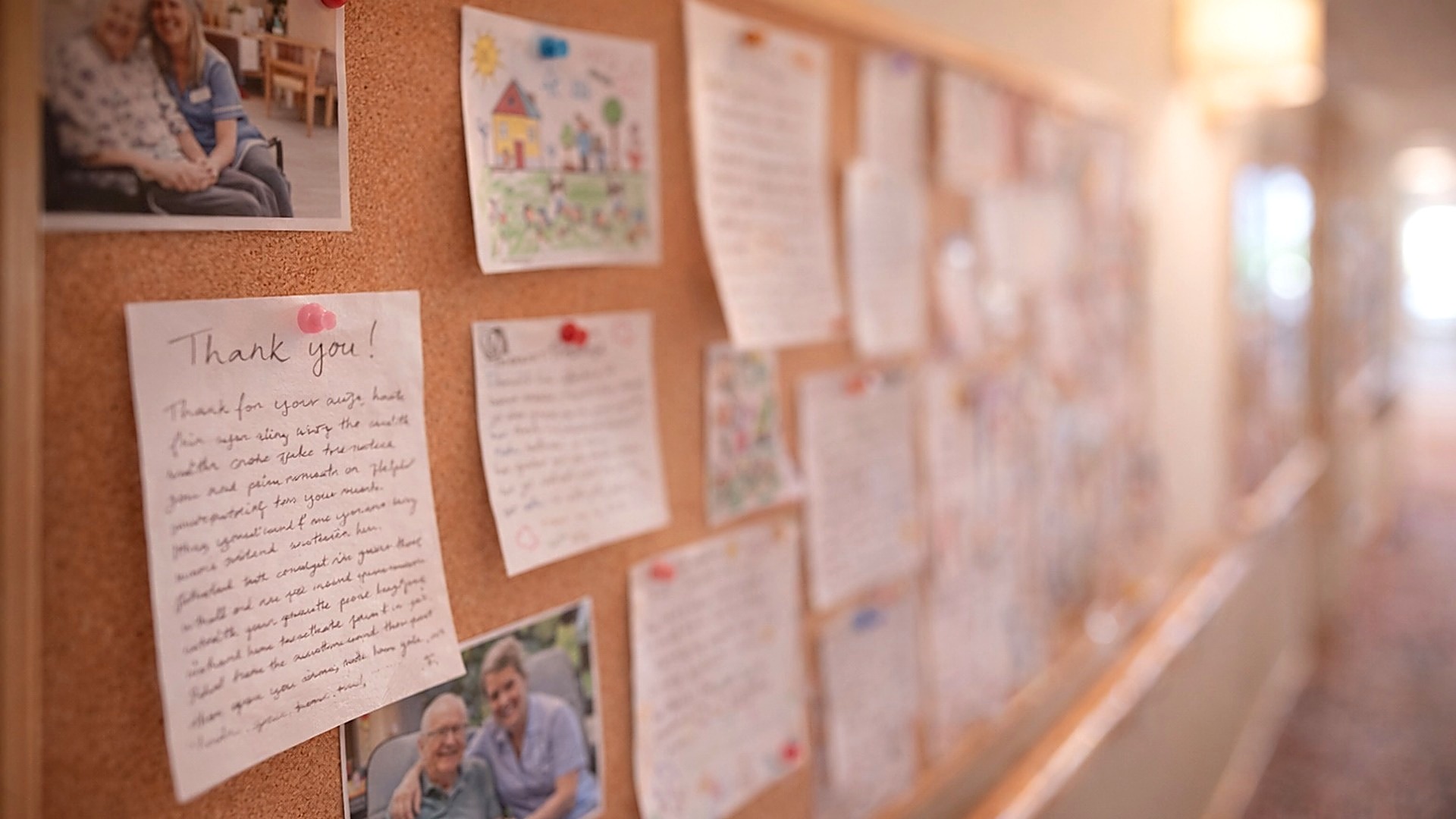
To get more care home reviews, invite every family in the same way at set points, on carehome.co.uk and Google. Never pay for reviews or pick only the happy families.
Then answer every review within a few days, and show families what others have said.
Picture a daughter who needs a room by Friday for her dad.
She has three names from the hospital discharge team and ten minutes in the car park. She reads your reviews before she decides who to telephone.
carehome.co.uk’s 2026 reviews webinar says more than 76% of 1,594 care seekers rated reviews extremely or very important. It also says profiles with 20 or more reviews get 24% more enquiries than its site average.
Those are the site’s own figures, and it sells listings, so treat them as a guide. For scale, say your room earns £1,200 a week.
One family who chooses you after reading your reviews could be worth £62,400 over a year. Our occupancy calculator will show your own numbers.
What should you do first?
You can do most of this in an afternoon, with no budget.
- Find your profiles. Check you can sign in to your Google Business Profile and your carehome.co.uk listing, and that the name, telephone number and registered beds are right.
- Read every review from the last two years. Write down what families praise and what they complain about more than once.
- Answer anything that has no reply, starting with the most recent.
- Choose one owner. An administrator or deputy is often best, with the Home Manager answering anything difficult.
- Write down when every family will be invited, and start with the families you see this month.
- Put 15 minutes in the diary each month to send invitations, answer reviews and look at your score.
If the same complaint keeps coming up, start fixing it now and keep inviting as normal. The CMA warns against stopping and starting invitations in ways that keep negative reviews out.
Who is allowed to leave a care home review?
On carehome.co.uk, the review guidelines allow residents, their family and friends, legal representatives and regular volunteers.
A regular volunteer is unpaid, has visited at least three times in 12 months and has no other professional link to the home.
The review must come from first-hand experience of care in the last 12 months. A family who only came for a tour cannot review you, however much they liked it.
These people cannot leave a review on carehome.co.uk:
- staff, owners, students and people on work experience
- anyone who left your staff in the last 12 months
- professionals connected to the home or the resident, such as a visiting doctor, hairdresser or entertainer
- owners and staff of a direct competitor
- immediate family of anyone on this list
Google’s rules are shorter and just as firm. A review must reflect a real experience, and Google names current or former employment and family ties among the conflicts of interest it does not allow.
How do you ask for reviews without breaking the rules?
Ask everyone. This is where well-meant advice goes wrong, because “ask your happiest families” is exactly what the rules forbid.
carehome.co.uk says homes must not selectively solicit reviews. Google says the same about positive reviews.
The fake reviews guidance from the Competition and Markets Authority (CMA) gives “encouraging just those who are satisfied” as a form of cherry-picking.
The practical answer is a routine that does not depend on anyone’s mood. Choose points in the year when every family hears from you anyway. These work well for most homes:
- the six-week settling-in meeting
- each care plan review
- your relatives’ newsletter, twice a year
- the footer of the emails your administrator sends
- a card or poster in reception, with a QR code to scan at home
Use the same words for everyone, and ask for honesty. You could send this:
We ask all our families to share their experience of the home, good or bad. It helps others choosing care. If you would like to leave a review, here is the link. There is no obligation.
Suppose a son tells your receptionist how kind the night staff have been.
Thank him, and say, “We ask all our families for a review, and I’ll make sure you have the link.” That is fine, because everyone else has the link too.
Do not ask for particular content. Google’s rules cover requests for specific words, and that includes asking a family to mention a named carer.
carehome.co.uk’s Invite to Review link and review cards come with its paid Enhanced and Platinum listings.
If you are on a free listing, ask carehome.co.uk what you can use. Google suggests a link or QR code from your profile.
We would leave out the tablet in reception, even though carehome.co.uk’s webinar lists one. Google says not to pressure people into reviewing on the premises, and it is hard to be honest with the receptionist watching.
What about a resident who needs help?
Online reviews must be submitted by the named person, with no help. A carehome.co.uk review card is different.
Family, a friend, a legal representative or a regular volunteer can help a resident fill one in, and the resident signs it.
Staff can never help, however kindly it is meant. If a resident wants to say something lovely and cannot hold a pen, wait for her daughter’s visit.
What is against the rules, and what is against the law?
Since April 2025, the Digital Markets, Competition and Consumers Act 2024 has banned fake reviews and reviews that hide an incentive. The CMA’s guidance explains how this works in practice.
The guidance counts these as commissioning a review:
- asking a member of staff to write one
- offering money, discounts, vouchers or free gifts in return
- offering a refund or gift card to change a negative review so it no longer reflects the person’s experience
It also warns against discouraging negative reviews, for example by threatening legal action or making a complaint’s resolution depend on staying quiet.
The penalties are serious. The CMA can fine a business up to 10% of global turnover or £300,000, whichever is greater.
The platforms act too. Google agreed with the CMA that UK businesses caught boosting ratings with fake reviews get a warning on their profile and cannot receive new reviews.
carehome.co.uk also bans prize draws, even where the law is less strict.
Its checks look at matching telephone numbers, shared internet connections and duplicate wording, so a home’s own computer is a poor place for reviews to come from.
This is a plain-English summary. Take legal advice on any particular problem.
How do you respond to reviews?
Answer all of them, good and bad, within a couple of working days if you can. The next family reads your reply as closely as the review.
On carehome.co.uk, a new review waits as pending for seven days and then publishes.
You can publish it sooner, with or without a reply, and you have up to six months to add one. Replies are checked before they appear.
Google’s advice is to keep replies short and personal, skip promotions and avoid sending everyone the same thank-you.
Answering a critical review
Let the Home Manager write this one, after talking to the team.
Thank the person, say you are sorry they were disappointed, and say what you have done or will do. Then give a named person to speak to.
Thank you for telling us, and I am sorry communication fell short. We have changed how we update families after a GP visit. Please call me on [number] to talk it through. [First name], Home Manager.
Never add a fact about the resident that the reviewer did not write.
Leave out diagnosis, care details, room numbers and incidents, even when you feel the review is unfair. carehome.co.uk does not allow them in replies, and you owe that resident privacy.
If the review raises a real concern, treat it as a complaint too. Follow your complaints procedure, and keep that conversation private.
Answering a kind review
Two lines are enough. Pick up something the reviewer wrote and pass the thanks on to the team.
Thank you for this. Our activities team were delighted to read what you wrote about the garden club, and I have shared it with them.
Can you get a review removed?
Only if it breaks the rules. carehome.co.uk takes a neutral view of disagreements about what happened, so you reply with your version of events.
You can challenge a review that is defamatory, from someone not allowed to review, or out of time.
Email carehome.co.uk with your reasons, and no names. For a pending review, the email must arrive by 2pm on the working day before it publishes.
Google asks you to report only reviews that break its policies, and says it does not get involved in disputes with customers.
How does the carehome.co.uk review score work?
The score is out of 10, and only reviews published in the last 24 months count.
Up to five points come from the average of the ratings families give. Up to five come from the number of positive reviews.
A positive review is one where the overall experience is rated good or excellent. Twenty positive reviews in 24 months earn four points, whatever your size.
The last point comes from reaching 20% of your registered beds, so a 50-bed home needs 10.
Because old reviews drop out, a burst of 30 in one month will fall away together two years later.
One new review a month gives you 24 in the window. carehome.co.uk’s webinar also points to one or two new reviews a month.
The score also feeds its Top 20 awards. You do not apply. Homes need at least five published reviews and must meet its regulatory criteria, and the highest scores in each region win.
What if your Google rating is low?
Your average only moves as real reviews arrive, so this takes months. As an example, say you have 20 Google reviews averaging 3.2 stars. It takes 16 new five-star reviews to reach 4.0.
So fix what people complain about and answer the old reviews, while invitations carry on as usual. Good reviews then have something real to describe.
Where should you use your reviews?
Start with your website, where families who are already interested can read them. carehome.co.uk’s webinar lists review widgets for displaying them. Showing the whole feed, with no hand-picking, is the honest way to do it.
Use them when you follow up an enquiry too. A link to your full profile lets the daughter from the car park read what others said while she decides whether to book a visit.
Our guide to handling care home enquiries covers that follow-up.
Quoting one review on a poster or in a brochure is fine, with some care. The CMA’s advice for care home providers warns against selectively highlighting positive reviews that are inconsistent with an inspection report.
Our guide to your CQC rating and your marketing explains how to talk about your rating honestly.
Ask the reviewer before you use their words outside the review site, especially on social media.
If you are having posters or a reception display made, keep the words real and the design simple. Our care home graphic design page shows the sort of thing we mean.
Reviews also help you turn up in the places families look. Our guide to getting found on Google and AI explains where they fit, alongside the rest of being found on Google.
When is it worth getting help?
Most homes can run this themselves in 15 minutes a month, so start there. Help is worth paying for when nobody has those 15 minutes, or when you have several homes to watch.
Our care home reputation management is part of the Marketing Assistant. Each month we read your reviews, tell you what to answer and check your listings. Replies written for you are coming soon.
Whoever you use, walk away from anyone who promises a star rating or a number of reviews.
The CMA’s guidance gives that kind of offer as an example of what is banned, where fake reviews are the method.
Every guide on this topic
Getting reviews
Understanding reviews
Answering reviews
Using reviews
Free tools